The houses of the future: trends and curiosities of real estate around the world
Hybrid, with multifunctional spaces, the use of recycled and sustainable materials and the presence of open spaces and common areas.
Read More
Between 1 May and 31 October 2015, the Universal Exposition took place in Milan, with the theme "Feeding the Planet, Energy for Life". World Expositions are events held every five years in a country designated through a selection process among candidate nations.
The events are held, for reasons of space, in large areas where exhibitors build their own temporary pavilions to welcome visitors; at the end of the event, the pavilions are dismantled, and some of the buildings constructed for the occasion are often repurposed: such is the case of the Eiffel Tower in Paris, built for the 1889 Expo, the old Milan Trade Fair launched with the 1906 Exposition, the Crystal Palace built for the London Exposition of 1851, and the Habitat 67 complex built for the 1967 Montreal Exposition.
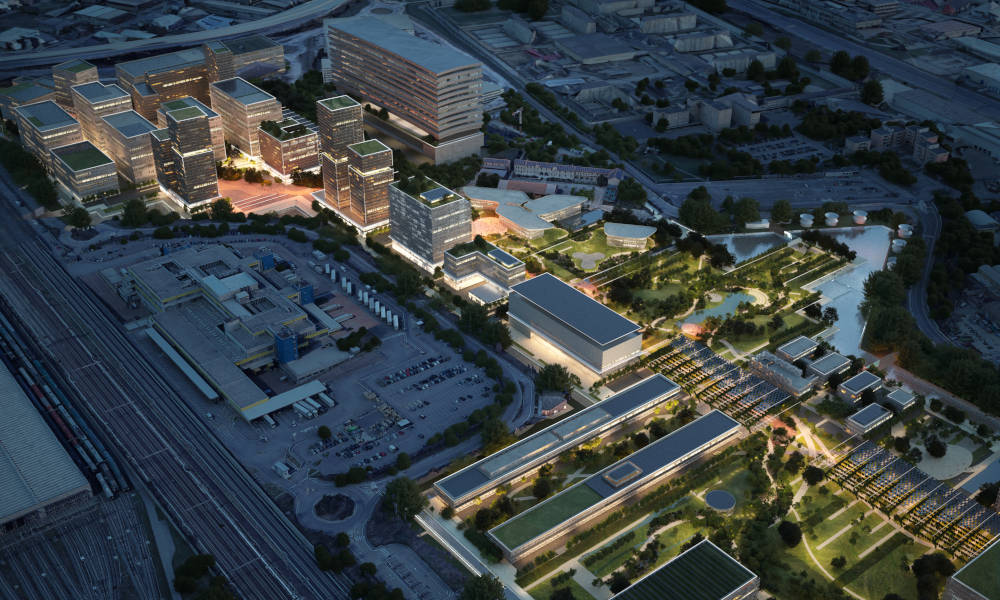
The area chosen for the event was in the north-west sector of Milan, 90% of which lay within the municipal boundaries of the regional capital and the remaining 10% in the municipality of Rho. It covered an area of 110 hectares adjacent to the new Fiera Milano exhibition complex.
At the conclusion of EXPO 2015, the local community and administrations began to reflect on the future of the area that had hosted the event, from which exhibitors had removed their pavilions, leaving an empty and uninhabited site.
It quickly became clear that this part of the Milan metropolitan area was destined for transformation — a process already underway in neighbouring areas: old warehouses were being replaced by new residential and non-residential buildings, infrastructure was being developed, and the surrounding context was changing face.
A public-private partnership was therefore identified as the most viable instrument for carrying out this transformation, leading to an agreement between Arexpo, the company owning the land, and Lendlease, an operator specialised in urban regeneration projects.
This agreement was aimed at creating the future MIND district (hereinafter the "District" or the "MIND District"), conceived as an innovation district where academia, training and research institutions, businesses, start-ups, incubators, and accelerators could share and exchange resources, knowledge, and technologies.
Within the MIND district, the headquarters of several centres of public interest will be established, all linked to the world of scientific and medical research: the Human Technopole, the IRCCS Galeazzi, the Triulza Foundation, and the University of Milan's Science Campus.
There will also be buildings housing education, productive activities, services, and retail, as well as residential units designed for all the workers who will commute to the district each day and for the students who will study there; numerous shared spaces and large parks will also be created.
One aspect that sets the MIND project apart from most innovation districts in the world is its commitment to being a carbon-neutral neighbourhood, powered entirely by 100% renewable energy, with minimal ecological impact and sustainable buildings.
For example, only electric and sustainable mobility will be permitted within the district; a smart grid for district heating and cooling will make MIND a zero-emissions zone.
A project of this scale brings with it ambitious objectives, also in relation to the breadth of its impact on the surrounding area.
The establishment of activities and people generates a flywheel effect for local economies not directly involved in MIND's activities — not only economic, but also social.
In this context, the city of Rho and its immediate neighbours will certainly be those that benefit most from this effect: one need only think of all the services that will be required by those living and working in the District, the supply of which will also need to be multicultural in order to meet the needs of the 32 different nationalities currently hosted there.
Not only housing, therefore, but also nurseries, schools, leisure spaces, and more — which will need to be developed not only within the District's perimeter, but also beyond it, necessarily in the surrounding towns.
Among the primary needs of the community that will revolve around the MIND District, housing is undoubtedly the most immediate and pressing.
Among the functions planned for the district, some buildings are earmarked for rental housing: it will not be possible to purchase property outright within the MIND district, as the land is granted under a 99-year right of use.
Those wishing to purchase will therefore need to look to the housing supply outside the District — namely the Cascina Merlata development and the new projects currently under construction in Rho and the surrounding municipalities.